
Tilt-and-turn windows are not just a European idea anymore. You’ll find them widely available across the UK and increasingly chosen by homeowners who want a blend of style, security, and practicality. Whether you’re renovating, extending, or building a new home, IDL Windows offers a complete supply and installation service for high-quality tilt-and-turn windows in both uPVC and aluminium — expertly crafted and tailored to suit the needs of the British market.
What was once considered a “continental feature” has now become a mainstream choice here in the UK. More and more homeowners are moving away from traditional casement or sash windows in favour of tilt-and-turn designs because they fit perfectly with modern British living. They’re sleek, versatile, and meet today’s demands for energy efficiency, child safety, and easy maintenance.
You’ll notice that these windows aren’t limited to one type of property. They’re being fitted in new-build homes such as modern family houses, stylish extensions like garden rooms, and period renovations including Victorian terraces, where homeowners want the advantages of advanced glazing without compromising on appearance. UK window specialists often describe tilt-and-turns as quietly reshaping the market because their design flexibility and energy performance appeal to a wide range of modern homeowners. Their ability to combine contemporary looks with long-term performance makes them a natural fit for today’s homes.
Speak with Our Window Experts Today
Get friendly advice on modern tilt-and-turn windows and find the perfect fit for your home — expertly supplied and installed across the UK by IDL Windows.
📞 Call 0782 834 0768In short, if you’re wondering whether tilt-and-turn windows are available and suitable for your home, the answer is a confident yes. They are not only readily available from a wide range of UK installers but also fully aligned with British building regulations, climate needs, and modern design preferences.
What Are Tilt & Turn Windows?

Tilt-and-turn windows are a European design that offers two opening options in a single frame, all controlled by one handle. When the handle is pushed upwards, the top of the sash tilts inwards a few inches, creating safe, secure ventilation. When the handle is turned sideways, the whole sash swings fully inwards on side hinges, much like a door. When the handle is pointed downwards, the window is locked and sealed just like a fixed unit.
This dual-function design combines ventilation flexibility with full-opening convenience. In the tilt position, you can ventilate your home without worrying about rain coming in or children having access to a wide opening. In the turn position, you get a wide, clear opening that not only brings in maximum fresh air but also makes cleaning the outside glass from indoors quick and easy a real bonus for upper-floor rooms.
The beauty of tilt-and-turn windows is that they’re simple to use. One handle does it all, with a smooth and reliable mechanism that’s built for long-term use. Closed, the frame looks sleek and secure; tilted, it provides discreet airflow; turned, it creates a large, practical opening.
Originally developed in Germany and Scandinavia, tilt-and-turn windows have grown in popularity across the UK because they combine the benefits of traditional casement and top-hung windows. They give you flexibility, unobstructed views in spaces like living rooms or kitchens, and a versatile way to control light and ventilation all while fitting neatly into both modern and traditional British homes.
Benefits of Tilt & Turn Windows
Tilt-and-turn windows offer a range of practical and aesthetic advantages that make them a standout choice for UK homeowners. From ventilation to security, their design combines functionality with modern style, giving you a versatile and reliable window solution.

Ventilation
One of the most useful features is the tilt function, which allows the top of the window to open just a few inches. This controlled airflow lets you ventilate your home without fully exposing the room to the outside. You can even leave the window tilted in light rain, letting fresh air in while keeping water out. In many cases, this built-in venting eliminates the need for additional trickle vents, helping your home meet UK Part F ventilation requirements.
Safety
Tilt-and-turn windows are designed with safety in mind. When tilted, the sash opens only slightly, so there’s virtually no fall risk for children or pets. Many windows come with optional handle restrictions or child-lock modes, which prevent the sash from turning fully open, giving you peace of mind for upstairs bedrooms and family spaces. Compared to conventional casement windows, tilt-turns are often considered safer for young children because their limited tilt opening reduces fall risks.
Security
Security is another strong advantage, as the design integrates robust multi-point locking systems. In the tilt position, the window cannot be opened from the outside, while the inward-swing turn mode, combined with a strong aluminium or uPVC frame, makes forced entry extremely difficult. Reviews consistently highlight that these windows provide security that is superior to basic single-point locking systems.
Easy Cleaning
Cleaning tilt-and-turn windows is straightforward. In the turn position, the sash swings completely inside, allowing you to clean both sides of the glass safely from indoors. This is especially convenient for upper-storey windows, eliminating the need for ladders or external access equipment. Many UK installers cite this as one of the main reasons homeowners choose tilt-turn designs.
Energy Efficiency
Modern tilt-and-turn windows are built to perform in terms of energy efficiency. Multi-chamber frames, multiple seals, and the option for triple glazing help reduce heat loss, giving you lower U-values that meet or exceed UK Part L energy standards. The advanced sealing also provides better airtightness and insulation than many older window types, helping you keep your home warm and your heating bills lower.
Aesthetics
Tilt-and-turn windows offer a sleek, contemporary look. Aluminium frames, in particular, allow for slim profiles and larger panes, giving you cleaner sightlines and more natural light. UK installers note that these modern designs can achieve slimmer frame profiles than traditional casement windows, creating an elegant and unobstructed view. Whether you’re renovating a contemporary flat or adding a stylish kitchen extension, tilt-and-turn windows give your home a polished and modern appearance.
Upgrade to Energy-Efficient Tilt & Turn Windows
Discover the perfect blend of modern design, security, and performance. IDL Windows supplies and installs premium uPVC and aluminium systems built for British homes.
View Tilt & Turn RangeComparison with Other Window Styles
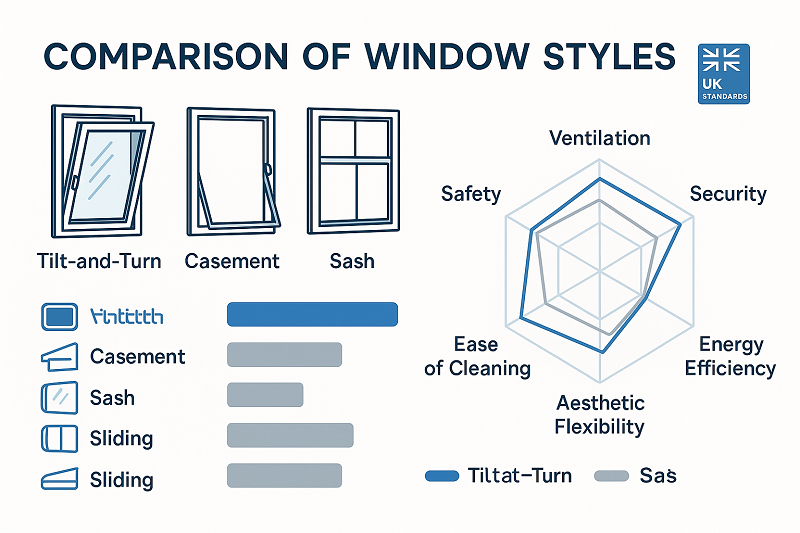
When choosing new windows for your home, it’s important to understand how tilt-and-turn windows compare with other popular styles. This helps you make an informed decision that balances everyday usability, design appeal, and the long-term durability of your windows.
Casement vs Tilt-and-Turn
Traditional casement windows open outward on side hinges and generally require additional trickle vents to provide background airflow. Tilt-and-turn windows open inward and include the tilt function, allowing controlled ventilation without fully exposing your room. This feature helps you comply with UK Part F ventilation standards while maintaining safety.
Casements cannot safely open just a few inches, whereas tilt-and-turns let you do exactly that, making them ideal for upstairs bedrooms or playrooms where children spend time. The main advantage of a casement is that it doesn’t take up interior space when open, but it lacks the dual functionality and security benefits of tilt-and-turn windows.
Sash Windows
Sash windows feature a classic sliding design in which one or both panes move vertically to control airflow. While they have traditional appeal and suit period properties, they require full opening for ventilation and can be more difficult to clean. Tilt-and-turn windows achieve ventilation without opening fully and allow you to clean both sides of the glass from indoors, which is especially useful for upper floors. Tilt-and-turns also provide superior security, as sashes can sometimes be lifted or forced open, whereas tilt-turns lock firmly in both tilt and turn positions.
Sliding Windows and Doors
Sliding windows or doors move horizontally or vertically along a track. Unlike tilt-and-turn windows, they cannot tilt for controlled ventilation. While sliding options can save interior space and allow wide openings, they often have weaker seals compared to a well-installed tilt-and-turn window. Tilt-and-turns provide the flexibility of two-axis opening, combining both ventilation and full access in a single frame.
Conclusion
Tilt-and-turn windows effectively combine the advantages of multiple window types. They offer the full opening convenience of casements, the controlled ventilation of top-hung vents, and superior security and energy efficiency. UK homeowners increasingly choose tilt-and-turn designs for modern family houses and contemporary flats because they deliver flexibility, comfort, and long-term value.
How to Match Tilt & Turn Window Styles with Your Home’s Architecture?
When choosing tilt-and-turn windows for your home, the material and finish play a key role in durability, appearance, and performance. Each option offers unique benefits — for example, uPVC for affordability, aluminium for strength, and timber for character — so it’s important to match the frame material to your home’s style, your budget, and long-term maintenance expectations.
uPVC (Vinyl)
uPVC is the most affordable material for tilt-and-turn windows. These frames are highly durable, virtually maintenance-free, and only require an occasional wipe-down with a damp cloth to keep them looking fresh. With a typical lifespan of 25+ years, uPVC offers a cost-effective, long-lasting solution without compromising on quality. Many UK homeowners choose uPVC windows for its reliability and ease of care, making it a practical first choice for modern homes.
Aluminium
Aluminium frames are strong yet lightweight, allowing for very slim profiles that support large panes of glass. Aluminium windows gives your home a contemporary look while maximising natural light. Aluminium is corrosion-resistant and can last 30+ years, making it a popular choice for premium UK tilt-and-turn windows. Powder-coated finishes are highly durable, resisting fading and wear from the UK climate. Aluminium, or aluminium-clad frames, offer the perfect combination of strength, longevity, and style for modern kitchens and exterior façades.
Wood (Timber)
Timber offers a classic, warm aesthetic and is often chosen for period homes or properties in conservation areas. Wood is a sustainable option if sourced responsibly and can last 60+ years with proper maintenance, including periodic repainting or staining. While timber tilt-turn windows are more expensive upfront, they provide traditional charm, excellent insulation, and long-term value when maintained correctly.
Composite / Aluminium-Clad
Some tilt-and-turn systems combine a timber interior with an aluminium exterior, offering both the aesthetic warmth of wood inside and the durability and low maintenance of aluminium outside. These hybrid designs are increasingly popular in the UK for homeowners who want style, longevity, and minimal upkeep.
Finishes and Hardware
UK tilt-and-turn windows are available in a wide range of colours and finishes. uPVC and aluminium frames commonly come in white, grey, anthracite, or wood-effect foils. Dual-colour frames white inside, grey outside are popular for a clean, modern look. Hardware options, including handles, hinges, and locks, are available in chrome, black, white, or other finishes to complement your décor. This flexibility ensures your tilt-and-turn windows can seamlessly match your home’s style while maintaining strong insulation performance and long service life.
Where to Buy Tilt & Turn Windows from Reputable UK Brands
Tilt-and-turn windows are widely available in the UK, offering high-quality options for homeowners seeking durable and stylish designs. Choosing a trusted supplier ensures reliable products and full compliance with British standards because established brands offer certified systems and professional installation.
Origin
Origin is a UK-based specialist in premium aluminium glazing, offering bespoke aluminium windows including tilt-and-turn models. Frequently chosen by architects for high-end projects, Origin windows are known for sleek design, slim profiles, and exceptional durability. Origin is a leading choice for homeowners seeking a contemporary, custom-designed aluminium tilt-turn window solution.
Sunflex UK
Sunflex UK provides high-performance aluminium glazing systems, including tilt-and-turn windows suitable for modern townhouses and traditional period homes. Their products are known for robust construction, smooth operation, and excellent thermal performance, making them a trusted choice for UK homeowners.
Sheerline
Sheerline specialises in aluminium windows and doors, offering tilt-and-turn configurations that combine strength, durability, and contemporary styling. Many UK installers use Sheerline systems because their precision-engineered aluminium frames maximise light and maintain long-term performance.
Cortizo
Cortizo is a European aluminium systems manufacturer with a strong presence in the UK. Their tilt-and-turn window profiles provide excellent structural integrity, thermal efficiency, and versatile design options, making them ideal for both new-builds and renovation projects.
Summary
Tilt-and-turn windows are widely available from Origin, Sunflex UK, Sheerline, and Cortizo. Whether you want sleek aluminium frames from Origin, enhanced thermal performance from Sunflex, or a tailored finish from Sheerline, these suppliers provide high-quality products that deliver security, energy efficiency, and long-term durability. Choosing a reputable installer from these brands ensures your windows will perform reliably for years to come.
Are Tilt & Turn Windows Compliant with UK Building Regulations?
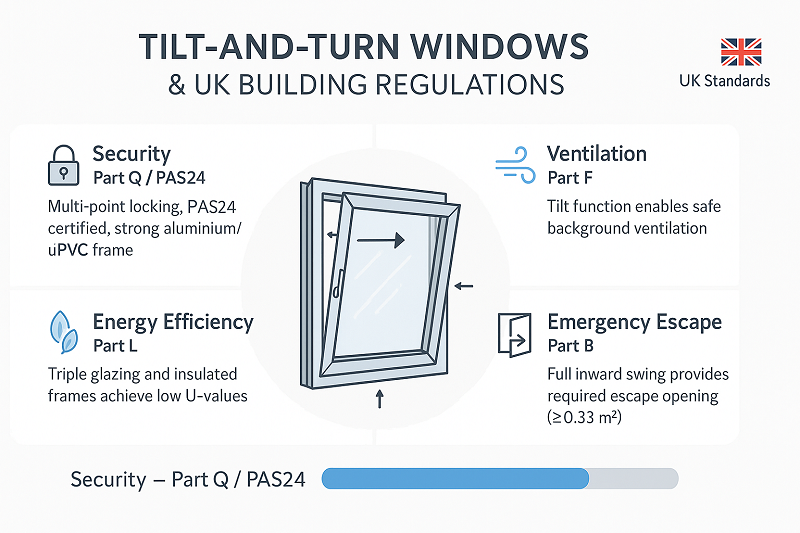
When choosing tilt-and-turn windows, it’s essential to consider UK building regulations and overall suitability. These windows are designed to meet modern standards for security, ventilation, energy efficiency, and emergency escape, giving you confidence that your installation is both safe and compliant.
Security (Part Q / PAS24)
Tilt-and-turn windows generally feature multi-point locking systems and strong, durable frames. This means they can be specified to meet PAS24 security requirements, satisfying Part Q of UK dwelling regulations. With these locks, which engage multiple points around the frame, your windows provide excellent resistance to forced entry, giving you peace of mind whether you’re at home or away.
Ventilation (Part F)
UK building regulations require adequate background ventilation to maintain indoor air quality. The tilt function acts as a built-in vent, allowing continuous background airflow without fully opening the room. Unlike fixed trickle vents, a tilted window provides controlled ventilation while keeping your home secure and weatherproof. This feature supports compliance with Part F standards, providing fresh air safely and efficiently.
Energy Efficiency (Part L)
High-spec tilt-and-turn windows with triple glazing and insulated frames can achieve low U-values, exceeding Part L energy standards. This ensures that your home remains warm, reduces heat loss, and lowers energy bills. Whether you’re fitting windows in a new-build home or upgrading an older Victorian terrace, tilt-and-turn units can help you meet UK energy regulations and improve thermal performance.
Emergency Escape (Part B)
UK law requires at least one emergency egress window in upper-floor bedrooms with a minimum clear opening of 0.33 m² (approximately 450×450 mm). A tilt-and-turn window in its turn mode can provide this clear opening if the frame is sized correctly. Note that the tilt mode does not meet escape requirements, as it only opens about 5–10 cm. To comply with fire safety regulations, ensure your chosen window can fully swing open to provide a safe exit.
Are Tilt & Turn Windows Suitable for All Property Styles?
- New builds and renovations: Tilt-and-turn windows are widely used in modern family homes and apartment developments, offering both style and high performance.
- Flats and upper floors: They are an excellent choice for higher-level installations, providing safe ventilation and easy cleaning from inside.
- Period homes: Timber or timber-clad tilt-and-turn options are available for conservation areas, improving comfort and energy efficiency in older buildings. With proper maintenance, timber units can last 60+ years.
Considerations
Tilt-and-turn windows open inward, so ensure furniture or radiators are positioned to allow clearance. When the window is intended as an emergency escape route, double-check that its fully open dimensions comply with regulations. Always use a FENSA- or CERTAS-certified installer, as certified professionals ensure compliance, proper fitting, and long-term performance.
How Much Do Tilt & Turn Windows Cost in the UK?
Tilt-and-turn windows are often considered a premium option because their design combines advanced functionality and enhanced security compared to traditional casement or sash windows. Their dual-function mechanism, robust construction, and modern design make them slightly more expensive, but the added features and long-term benefits can make them a worthwhile investment for your home.
Premium vs Standard
Their complex operation and high-quality components mean tilt-and-turn windows typically cost more than ordinary casements or sash windows. UK industry sources, including GreenMatch and the Federation of Master Builders (FMB), note that they are “slightly more” or “more expensive” due to their advanced functionality. They are generally positioned as a higher-end choice for homeowners of modern properties who want enhanced security, ventilation, and style.
Rough Costs
As a guide, January 2025 prices for a typical double-glazed tilt-and-turn window are:
- uPVC: £650–£810 per window
- Aluminium: £1,310–£1,625 per window
- Timber: £1,975–£2,435 per window
For context, a standard uPVC casement window may cost a few hundred pounds, making tilt-and-turn windows a higher-priced but more feature-rich option. The higher cost reflects the quality of the hardware, frame, and flexibility of the window design.
Value Factors
Tilt-and-turn windows cost more upfront but offer enhanced value through:
- Controlled ventilation for safer airflow
- Improved child safety with restricted tilt and turn positions
- Superior security with multi-point locking
- Sleek, contemporary styling that enhances the home’s aesthetic
- Long-term energy savings from low U-values and better insulation
FMB highlights that the ‘superior security, versatility and functionality’ of tilt-and-turn windows justify their cost by providing long-term durability and performance. Over their long lifespan—often 25–30 years for uPVC and 30+ years for aluminium—the combination of durability, energy efficiency, and low maintenance delivers strong return on investment.
Getting Quotes
Costs vary depending on material, frame size, glazing (double vs triple), and hardware options. Homeowners often report that tilt-and-turn windows can be 20–50% more expensive than a similar-size casement. To ensure you get the best deal, it’s wise to compare quotes from both local and national suppliers, focusing on quality, warranty, and professional installation.
Ready to Transform Your Home?
Get a free, no-obligation consultation with IDL Windows. Our experts help you choose and install the perfect tilt-and-turn windows for lasting performance and style.
Request a Free Consultation📞 Or call us directly: 0782 834 0768
Frequently Asked Questions about Tilt-and-Turn Windows
Are tilt-and-turn windows still in style?
Yes. Tilt-and-turn windows continue to be a popular and contemporary choice across the UK. Multiple sources, including GreenMatch, confirm that they are “quite popular throughout the UK” in 2025. UK window blogs also highlight their growing adoption in modern homes, extensions, and renovations. Their sleek aluminium or uPVC profiles, energy-efficient glazing, and versatile operation align perfectly with current trends for modern, minimalist, and sustainable home design.
Are they suitable for upstairs bedrooms?
Absolutely. Tilt-and-turn windows are ideal for higher floors. The inward-opening sash allows you to clean both sides of the glass safely from inside, eliminating the need for ladders. The tilt function provides controlled ventilation, opening only a few centimetres, which makes them significantly safer for children and pets. This combination of secure ventilation and easy maintenance makes them a smart choice for bedrooms, studies, and other upper-storey spaces.
Are tilt-and-turn windows more secure than other windows?
Yes, they are typically more secure than standard casement or sliding windows. Most tilt-and-turn models include multi-point locking systems along all edges of the sash, and many are PAS24-certified to meet UK security standards. In tilt mode, the window provides no potential entry point, while the fully open turn mode is reinforced by strong frames. Reviews from industry sources note that these windows offer superior security, versatility, and resistance to forced entry compared to conventional single-lock designs.
How easy are they to maintain?
Tilt-and-turn windows are very low maintenance. The level of upkeep depends on the frame material:
- uPVC: Needs only a simple wipe-down with a damp cloth.
- Aluminium: Almost maintenance-free; powder-coated finishes resist fading for decades.
Cleaning is simplified because the sash swings fully inward, allowing you to reach both sides of the glass safely. Handles, hinges, and locks may require light lubrication every few years, similar to any quality window system. Overall, they combine convenience with longevity, reducing long-term maintenance effort.
Do they comply with UK fire escape regulations?
Yes, if installed correctly. UK law requires emergency egress windows with a minimum 0.33 m² clear opening in upper-storey bedrooms. A tilt-and-turn window in turn mode can satisfy this requirement, provided the frame dimensions allow a fully open width of at least 450 mm. Note that tilt mode is not suitable for escape, as it only opens 5–10 cm. Always verify the window size and ensure your installer provides compliant measurements.
Are they draft-proof and energy-efficient?
Yes. Tilt-and-turn windows are designed for high airtightness, featuring multiple rubber seals and heavy-duty locking points. They prevent drafts more effectively than many older window styles. Combined with double or triple glazing, they achieve low U-values and meet or exceed UK Part L energy efficiency standards. For homeowners, this means lower heating bills, reduced cold spots, and improved comfort throughout the home.